

A digital journey describes the series of online interactions a person has with a business, from discovering a brand to researching products, making a purchase, receiving support, and potentially becoming a repeat customer. These interactions can happen across websites, search engines, social media, mobile apps, email, chat, and other digital channels.
What Is a Digital Journey?
A digital journey focuses on how customers move through digital touch points while interacting with a business. Unlike a simple website visit, it looks at the complete experience and the different steps a customer takes before and after a transaction.
For example, a customer might discover a company through Google, visit its website, read reviews, compare products, sign up for an account, complete a purchase through a mobile device, and later contact customer support. Mapping these interactions helps businesses understand where customers encounter problems and where improvements can be made.
Key Stages of a Digital Customer Journey
A commonly used framework divides the journey into five stages:
1. Awareness
Customers first discover a problem, need, product, or brand. Search engines, social media, online advertising, videos, and AI-powered search tools can all contribute to discovery.
2. Consideration
Customers begin researching available options. They may compare features, prices, reviews, case studies, and competing products before making a decision.
3. Decision
At this stage, customers take an action such as purchasing a product, subscribing to a service, requesting a quote, or creating an account.
4. Retention
The journey continues after conversion. Businesses can use email, apps, customer support, personalized content, and other digital channels to maintain engagement.
5. Advocacy
Satisfied customers may leave reviews, recommend a company, share content, or refer other people. These activities can create additional opportunities for brand discovery.
Why Digital Journey Mapping Matters
A digital journey map visually represents customer interactions, needs, questions, and potential obstacles across different stages. It can help teams identify friction points and understand where customers leave a process or require additional information.
For businesses, this can support improvements in website usability, content strategy, customer service, on-boarding, checkout processes, and post-purchase experiences.
Technology’s Role in the Digital Journey
Modern technologies are changing how businesses manage customer journeys. Analytics can reveal user behavior, while cloud platforms help connect digital systems. AI can analyze customer behavior, identify intent, and support more personalized interactions.
Digital transformation can also involve redesigning broader business processes rather than simply adding individual digital tools. McKinsey describes this as focusing on entire domains such as customer journeys, processes, or business functions.
How to Improve a Digital Journey
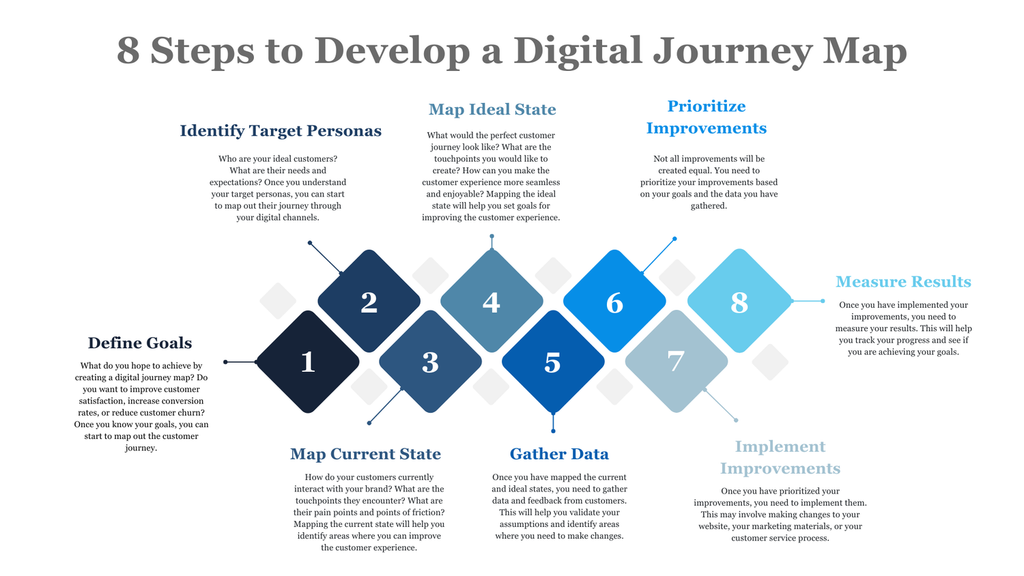
Businesses can improve their digital journey by:
- Identifying important customer personas and goals
- Mapping digital touch points from discovery through post-purchase
- Finding areas where customers experience friction
- Providing clear and relevant information at each stage
- Making websites and digital experiences mobile-friendly
- Connecting customer data across appropriate channels
- Using analytics to measure engagement and conversions
- Regularly testing and improving the customer experience
Conclusion
The digital journey is no longer limited to a customer’s path through a website. It can involve multiple channels and interactions before, during, and after a purchase. By mapping these touch points and understanding customer needs, businesses can create more consistent digital experiences while identifying opportunities to improve engagement, conversions, and long-term relationships.