
Perplexity AI SEO is the practice of optimizing website content so it can be discovered, understood, and potentially cited by Perplexity’s AI-powered search experience. Unlike traditional search, where users primarily receive a list of links, Perplexity searches the web and generates answers with citations to the sources it uses.
As AI search becomes an increasingly important discovery channel, businesses can consider Perplexity SEO alongside traditional Google SEO, rather than treating it as a replacement.
What Is Perplexity AI SEO?
Perplexity AI SEO focuses on making content useful and accessible for AI-powered retrieval. When a user submits a question, Perplexity can search the web, analyze multiple sources, synthesize information, and provide citations to supporting pages. Its official documentation describes Pro Search as conducting multiple web searches and synthesizing information from a range of sources.
This means simply ranking for a traditional keyword does not guarantee that a page will appear as a cited source in a Perplexity answer. Third-party research on Perplexity SEO suggests that relevance, content structure, authority, freshness, and direct answers are useful areas to focus on, although Perplexity does not publish a complete citation-ranking formula.
Why Perplexity SEO Matters
Perplexity displays clickable citations with its answers, allowing users to investigate the original sources.
For businesses, being referenced can create another potential path to:
- Brand visibility
- Website visits
- Content discovery
- Industry authority
- Product and service awareness
- Referral traffic
However, citation inclusion is not guaranteed, and there is no publicly documented formula that guarantees a particular page will be cited.
How to Optimize Content for Perplexity AI
1. Answer the Main Question Quickly
Start an article by directly explaining the topic. Avoid making readers or AI systems go through several paragraphs before reaching the core answer.
For example, if the target keyword is “Perplexity AI SEO,” the introduction should immediately define Perplexity SEO and explain its purpose.
Question-based headings can also help organize content around specific search intents.
2. Create Highly Relevant Content
Focus each article on a clearly defined subject. Avoid combining unrelated topics simply to increase keyword coverage.
A focused article about AI search optimization, for example, can naturally cover related concepts such as AI citations, answer engines, content structure, semantic search, and AI visibility.
3. Use Clear Content Structure
Organize pages with:
- One clear H1
- Descriptive H2 and H3 headings
- Short paragraphs
- Lists where useful
- Definitions
- Examples
- FAQs
- Relevant internal links
Clear organization makes information easier for readers to navigate and can also make individual passages easier for retrieval systems to interpret.
4. Support Important Claims With Sources
Use credible sources when making factual claims, particularly statistics, research findings, technical specifications, and industry data.
Perplexity itself emphasizes source transparency and gives users access to the sources behind its answers.
5. Keep Content Fresh
For topics that change frequently—such as AI tools, search features, software, regulations, and market trends—regularly review and update your content.
Include accurate publication and update information where appropriate, and remove outdated claims.
6. Build Topic Authority
Create related content around your main subject instead of publishing one isolated article.
For example, an AI SEO website could develop a topic cluster containing:
Perplexity AI SEO → AI Discoverability → AI Search Visibility → AI Citation Tracking → AI Answer Engine Optimization → AI Search Analytics
Use contextual internal links between these pages.
7. Make Your Website Technically Accessible
Content needs to be accessible to search and retrieval systems. Review your robots.txt configuration, indexing settings, canonical tags, page accessibility, and other technical SEO elements.
Do not assume that a particular technical setting automatically produces citations; technical accessibility is simply one part of the overall visibility process.
Perplexity SEO vs. Traditional SEO
Traditional SEO generally focuses on improving visibility in conventional search results. Perplexity SEO focuses more specifically on visibility within AI-generated answers and source citations.
There is considerable overlap between the two. High-quality content, relevant topics, technical accessibility, useful information, and authoritative sources can benefit both strategies.
The main difference is the search experience: Perplexity synthesizes information from web sources and provides citations alongside its answers.
Measuring Perplexity AI SEO
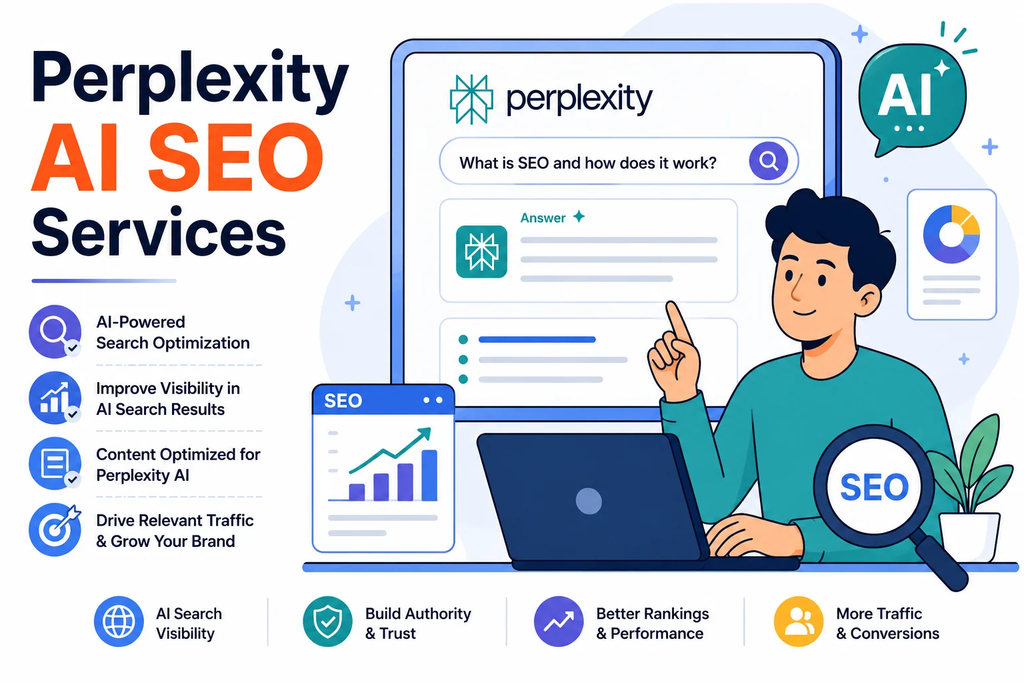
Businesses can monitor their AI-search visibility by regularly testing important queries and recording whether their pages are cited. Useful metrics can include:
- Number of Perplexity citations
- Cited pages
- Brand mentions
- Referral traffic
- Target queries producing citations
- Changes in citations after content updates
Testing should be repeated over time because AI search results can change as web content and retrieval systems change.
Conclusion
Perplexity AI SEO is an emerging part of AI search optimization. The practical approach is to create focused, accurate, well-structured content that directly answers users’ questions, supports important claims with credible sources, maintains topical authority, and remains technically accessible.
Perplexity’s own documentation confirms that its search experience retrieves information from the web and provides citations to sources, while current third-party SEO research suggests that clear, relevant, authoritative, and fresh content can improve the chances of being selected as a source.