AI agents are rapidly changing e-commerce by moving beyond simple chatbots and recommendation engines toward systems that can search for products, compare options, manage shopping carts, answer customer questions, and assist with purchases. This emerging model is often called agentic commerce.
In 2026, AI-driven shopping is becoming a more visible part of the customer journey. Salesforce reported that agentic search as the first step in a shopping journey grew 200% year over year, based on its research covering 3,450 commerce professionals, 4,690 consumers, and behavioral data from more than 1.5 billion global shoppers.
What Are AI Agents in E-Commerce?
AI agents are software systems that can understand a goal, gather information, make decisions within defined parameters, and perform multiple actions to accomplish that goal.
In e-commerce, a customer might tell an AI agent:
“Find me a lightweight laptop under $1,000 with at least 16GB of RAM and good battery life.”
Instead of simply returning a list of search results, an agent can potentially compare products, evaluate specifications, check availability, consider price and shipping, and help create a purchase-ready cart.
The level of automation varies. Current systems commonly keep the customer involved before the final purchase, while more autonomous shopping workflows are being developed. Adyen describes today’s agentic commerce as largely human-in-the-loop, where an AI can find, compare, and build a cart while the shopper still approves the purchase.
How AI Agents Automate E-Commerce
AI agents can automate several stages of the online shopping process.
1. Product Discovery
AI agents can understand conversational shopping requests instead of requiring customers to search using exact keywords. They can identify products based on requirements such as budget, features, brand preferences, availability, or intended use.
2. Product Comparison
An agent can compare multiple products across specifications, prices, reviews, shipping options, and other relevant information. This can reduce the amount of manual research shoppers need to perform.
3. Personalized Recommendations
AI systems can use information supplied during a conversation and, where permitted, customer preferences to generate more personalized recommendations.
4. Cart and Checkout Automation
One of the biggest developments is the ability for AI agents to move from discovery to transaction. Shopify says its agentic commerce infrastructure supports product discovery through AI channels and checkout workflows across platforms including ChatGPT, Microsoft Copilot, Google AI Mode, and Gemini for eligible merchants and markets.
5. Customer Service Automation
AI agents can also handle post-purchase tasks such as answering order questions, providing product information, helping customers understand policies, and escalating more complicated cases to human employees.
AI Agents Are Changing the E-Commerce Funnel
Traditional e-commerce generally follows a path such as:
Search → Website → Product Page → Cart → Checkout
Agentic commerce can create a different journey:
Customer Intent → AI Agent → Product Discovery → Comparison → Recommendation → Purchase
This means the AI interface can become an important layer between the customer and the retailer.
McKinsey estimates that, under moderate scenarios, AI agents could mediate $3 trillion to $5 trillion of global consumer commerce by 2030. This is a projection rather than a current measurement, and actual adoption may vary.
AI Agents and E-Commerce Automation for Businesses
For retailers, AI agents can automate more than customer-facing shopping.
Businesses can apply agentic systems to:
Product catalog management
Customer support
Inventory monitoring
Order management
Product recommendations
Marketing workflows
Lead qualification
Pricing analysis
Customer segmentation
Abandoned-cart follow-up
Internal reporting
Content creation and optimization
The combination of these capabilities can create interconnected workflows where one AI system gathers information while another performs a specific business task.
Why Product Data Matters
AI agents need accurate and structured information to make useful decisions. Product titles, descriptions, specifications, prices, inventory, images, shipping information, and other attributes must be reliable.
Shopify’s 2026 explanation of agentic commerce highlights the importance of structured product data being supplied to AI systems so products can be accurately represented during AI conversations.
This creates a new consideration for e-commerce SEO: websites increasingly need to be understandable not only to human shoppers and traditional search engines, but also to AI systems that interpret product information.
Amazon and AI Shopping Automation
Amazon is also expanding AI-assisted shopping. In June 2026, Amazon described its Alex for Shopping experience as combining shopping assistance with features such as personalized shopping guides, product comparisons, price-history information, deal finding, cart building, and routine-purchase automation.
These developments demonstrate how AI shopping is moving from simple product recommendations toward more task-oriented automation.
Challenges and Risks
AI agents also introduce new challenges for retailers and consumers.
Accuracy is important because an agent could potentially recommend an unsuitable product, misunderstand a requirement, or rely on outdated information. There are also concerns around payment security, privacy, fraud, transparency, and accountability.
A September 2026 report from Reuters noted that major banks have raised concerns about AI shopping agents potentially creating risks involving fraud, scams, sensitive financial information, and unclear consumer protections. The banks called for greater transparency and safeguards around AI-mediated transactions.
Therefore, successful e-commerce automation requires more than simply adding an AI chatbot. Businesses need appropriate permissions, reliable product data, secure transaction systems, human oversight, and clear rules for when an agent can take action.
The Future of AI Agents in E-Commerce
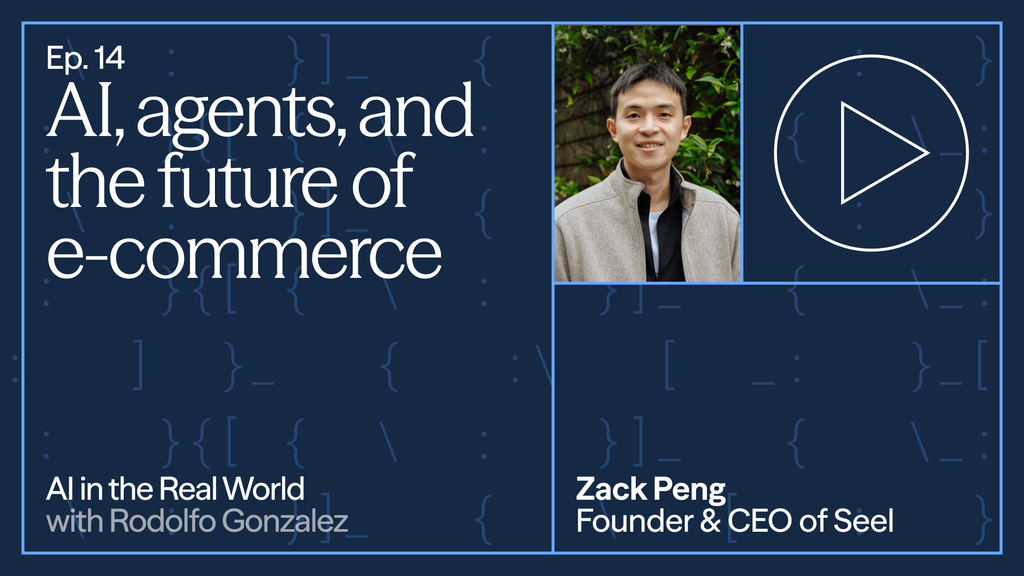
The next phase of e-commerce is likely to involve increasingly automated shopping journeys in which customers describe what they want rather than where they want to search.
For retailers, this means preparing product catalogs, websites, APIs, checkout systems, and customer-service workflows for AI-mediated interactions. Research published in 2026 on “agent-ready” websites similarly argues that e-commerce sites need stronger machine readability, action ability, and decision-reliability signals to support AI agents effectively.
Conclusion
AI agents and e-commerce automation are transforming online shopping from a keyword-driven process into a more conversational and task-oriented experience. AI can increasingly help customers discover products, compare choices, build carts, and complete parts of the purchasing journey.
For businesses, the opportunity is not simply to automate customer support. It is to make the entire commerce infrastructure AI-ready, with accurate product data, accessible systems, secure transactions, and appropriate human oversight. As agentic commerce develops, visibility inside AI-driven shopping experiences may become an increasingly important part of digital commerce strategy.