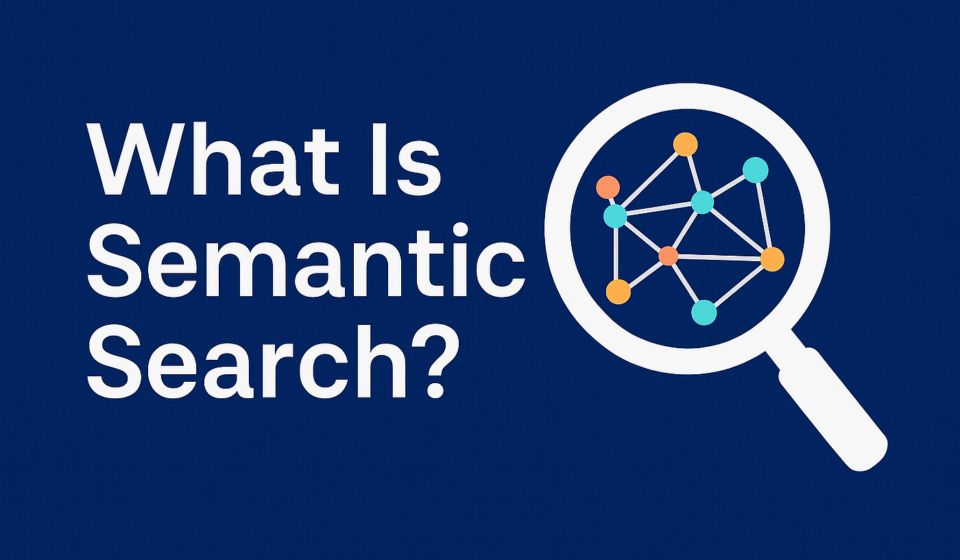

Semantic search in AI is a modern search technology that focuses on understanding the meaning and intent behind a user’s query, rather than simply matching exact keywords. Traditional search systems mainly look for words that appear in a query and compare them with words found in documents. Semantic search goes further by using artificial intelligence, natural language processing (NLP), and machine learning to understand context, relationships, and user intent.
How Does Semantic Search Work?
Semantic search uses AI models to analyze the meaning of words and phrases. Instead of treating every word separately, the system considers how words relate to each other within a sentence.
For example, someone searching for “best ways to reduce electricity costs at home” may receive results about energy-saving appliances, efficient heating and cooling, and household energy management—even if those exact words do not appear on the page.
Many semantic search systems use technologies such as natural language processing, machine learning, and vector embeddings. Embeddings convert text into numerical representations that allow AI systems to compare the meaning of different pieces of content.
Semantic Search vs. Traditional Keyword Search
Traditional keyword search depends heavily on exact or closely related words. If a user searches for “affordable smartphones,” a keyword-based system may prioritize pages containing those exact terms.
Semantic search can recognize that “budget-friendly mobile phones” has a similar meaning. This allows search engines and AI-powered applications to provide more relevant results even when the wording is different.
The main difference is that keyword search focuses on words, while semantic search focuses on meaning and context.
Why Is Semantic Search Important in AI?
Semantic search has become increasingly important as people use more conversational and complex queries. Users often ask questions naturally instead of entering short keyword combinations.
AI-powered semantic search can better understand these queries and identify information that matches the user’s actual goal. This can improve search accuracy, reduce irrelevant results, and create a more natural search experience.
Businesses can also use semantic search to improve internal knowledge systems, customer support platforms, e-commerce websites, and content discovery tools.
Applications of Semantic Search
Semantic search has many practical applications across different industries. E-commerce platforms can use it to understand what customers are looking for even when product descriptions use different terminology.
Companies can also implement semantic search in internal databases, allowing employees to find documents based on concepts rather than exact phrases. In customer service, AI-powered search can identify relevant answers from knowledge bases and support articles.
Semantic search is also widely used in AI chatbots, recommendation systems, enterprise search platforms, and retrieval-augmented generation (RAG) systems.
Benefits of Semantic Search
One of the biggest advantages of semantic search is improved relevance. Because AI considers context and intent, users can often find useful information without using the exact terminology found in a document.
Other benefits include better handling of conversational queries, improved content discovery, more accurate recommendations, and a better overall user experience.
For businesses, semantic search can also make large collections of documents and data easier to navigate.
The Future of Semantic Search

As AI models become more advanced, semantic search is expected to play an even greater role in how people access information. Search systems are increasingly moving from simple keyword matching toward understanding questions, context, and intent.
The growth of generative AI is also making semantic search more important because AI assistants need reliable ways to find relevant information before generating answers.
Conclusion
Semantic search in AI is a meaning-based approach to information retrieval that helps systems understand what users actually intend to find. By combining AI, NLP, machine learning, and technologies such as vector embeddings, semantic search can deliver more relevant results than traditional keyword-based methods. As search becomes increasingly conversational and AI-driven, semantic search will remain an important technology for businesses, websites, and intelligent applications.