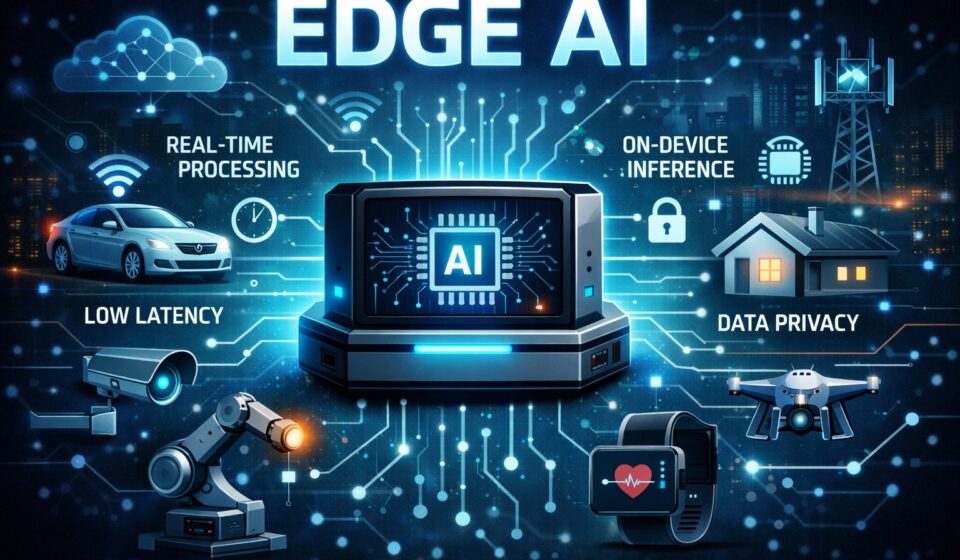

Businesses are processing data, making choices, and reacting to events differently thanks to edge AI for real-time analytics. Edge AI executes machine-learning models locally or close to the devices where data is created, as opposed to sending each piece of information to a centralized cloud server. Cameras, IoT sensors, automobiles, smartphones, industrial gateways, and linked devices can all fall under this category.
Edge AI for Real-Time Analytics:
Edge AI analyzes data at its source by fusing edge computing with artificial intelligence. Conventional cloud analytics usually transfers data to distant servers for processing before returning the outcomes. By conducting inference locally, lessens this reliance and enables systems to recognize patterns, spot irregularities, and initiate actions with significantly reduced latency.
A smart factory camera, for instance, may examine goods on a production line and spot flaws right away. Vibration sensors enable a machine to identify anomalous patterns and notify maintenance personnel prior to a malfunction. Instead of waiting for a round trip to the cloud, many apps profit from processing information locally.
The Operation of Edge AI
Several steps are included in a typical Edge AI analytics system:
- Data collection: Real-time data is gathered by sensors, cameras, machines, or linked devices.
- Local reprocessing: The incoming data is prepared, compressed, or filtered by the edge device.
- AI inference: The data is examined locally by a machine-learning model that has been trained.
- Making decisions: The system detects an abnormality, forecasts an occurrence, or produces an action.
- Cloud synchronization: For storage, reporting, model training, and long-term analytics, significant findings, summaries, or specific data may be sent to the cloud.
This hybrid strategy keeps the cloud relevant for large-scale analysis and model management while enabling the edge to address urgent decisions.
Key Advantages of Edge AI:
Quicker Decision-Making
Reduced latency is the main benefit. Organizations can react considerably more quickly to situations that call for quick action when data is handled close to its source. This is especially crucial for time-sensitive industries like manufacturing, robotics, transportation, and security.
Reduced Bandwidth Needs
It can take a lot of network capacity to send continuous video, sensor readings, and machine data to the cloud. Only significant events, forecasts, or summaries can be transmitted by Edge AI, which can evaluate the data locally. As a result, there is less needless data transmission, which can minimize networking and cloud expenses.
Enhanced ConfidentialityEdge AI:
Sensitive data can be kept closer to the point of collection thanks to edge processing. Reducing the quantity of raw data delivered to external servers can support more robust privacy controls for applications requiring video, personal information, industrial data, or medical equipment.
Increased Dependability
Even when internet connectivity is poor or momentarily unavailable, edge AI systems can nevertheless carry out crucial tasks. For remote buildings, automobiles, industrial settings, and other places where dependable access isn’t always guaranteed, local processing is extremely helpful.
Practical Uses Edge AI:
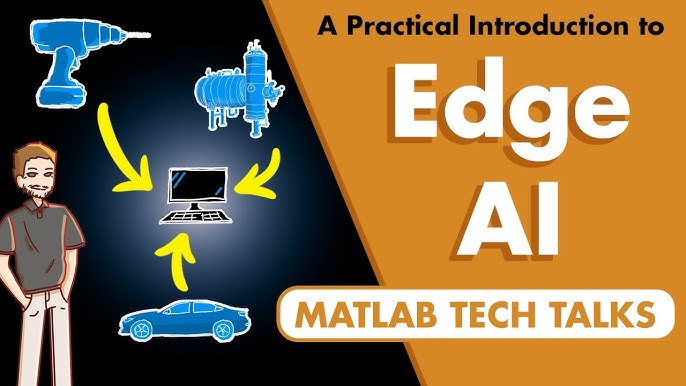
Intelligent Production
Edge AI can be used by factories for machine monitoring, product inspection, anomaly detection, and predictive maintenance. While sensor data can show anomalous vibration, temperature, or pressure patterns prior to equipment failure, computer vision models can detect flaws on production lines.
Medical care
Certain information can be processed locally by wearable technology and medical equipment to provide quicker monitoring and alarms. Additionally, local inference might lessen the need to send sensitive data regularly.
Intelligent CitiesEdge AI
Edge AI can monitor vehicle density, identify issues, and assist with dynamic traffic management by locally analyzing connected sensors and traffic cameras. It might only be necessary to send pertinent insights to central systems.
Robotics and Autonomous Vehicles
Robots and vehicles need to quickly process data from cameras, radar, and other sensors. They can understand their environment and react without fully relying on a distant cloud connection thanks to local AI inference.
Retail Cities Edge AI
While reducing the quantity of raw video that leaves the store, retailers can utilize edge-based computer vision to monitor inventory, evaluate customer activity, enhance store operations, and assist automated checkout systems.
Cloud AI vs. Edge AI
Cloud AI and edge AI are not inherently antagonistic technologies. In many business settings, they collaborate most effectively.
For quick judgments, local inference, privacy-sensitive processing, and settings with spotty connectivity, edge AI is perfect. Large-scale data storage, model training, historical analysis, centralized dashboards, and information management across several sites continue to benefit from cloud AI. Thus, a hybrid architecture can offer both potent centralized analytics and quick local intelligence.