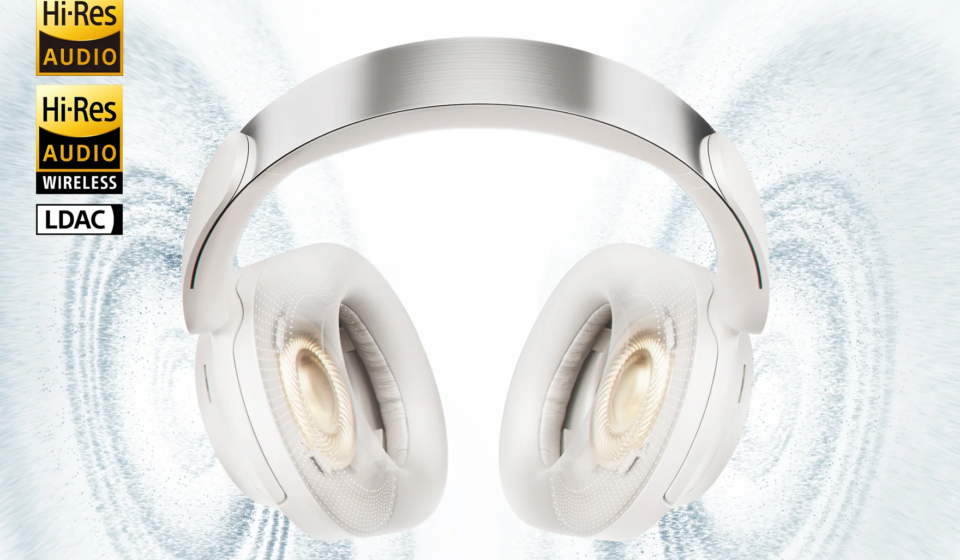

Smart headphones are a cutting-edge class of audio equipment that incorporates software-based features, sensors, wireless connectivity, artificial intelligence, and conventional sound technology. Smart headphones may adjust to their environment, respond to voice instructions, customize audio, and enable features like translation and hearing aid, in contrast to traditional headphones that are primarily focused on music and calls.
What Are Smart Headphones?
Smart headphones offer a more intelligent listening experience by combining microphones, processors, wireless technologies, and companion apps. AI-driven systems are able to autonomously modify sound parameters, such as transparency and noise cancellation, by analyzing their surroundings.
Essential Elements of Smart Headphones
AI-Powered Cancellation of Noise
Adaptive active noise cancellation (ANC) is one of the key components. Real-time noise reduction adjustments can be made by smart headphones by analyzing shifting background sounds. This can be especially helpful in busy streets, public transportation, offices, and airports.
AI and voice assistants
A lot of contemporary headphones are turning into entry points for AI helpers. Voice-activated services allow users to interact without continually reaching for their cellphones. Additionally, more recent audio platforms are investigating context-aware speech interactions and direct access to AI agents.
Translation in Real Time
Travel, foreign communication, and multilingual talks can all benefit from the real-time language translation capabilities of certain smart headphones and earbuds. The software, supported languages, connectivity, and whether processing takes place on the device or in the cloud all affect how effective translation is.
Customized Audio
Based on user preferences and, in some cases, hearing characteristics, smart headphones can generate customized listening profiles. AI can modify spatial sound, equalization, and other audio characteristics to produce a more personalized experience.
Features of Health and Hearing
Applications related to health and hearing are becoming more prevalent in the smart-audio market. Certain contemporary headphones and earbuds can support health platforms or offer assistance with hearing. Headphones are evolving from basic entertainment devices into more comprehensive wearable electronics thanks to this trend.
Advantages of Intelligent Headphones

Smart headphones have a number of benefits:
- Improved control over noise
- Tailored listening encounters
- AI support without the need for human intervention
- Better call and voice quality
- Easy wireless access
- Features for accessibility and translation
- Increased compatibility with smartphones and other gadgets
Smart headphones can be helpful for work, travel, entertainment, gaming, fitness, communication, and daily productivity thanks to these features.
Intelligent Headphones for Productivity and Work
Professionals can benefit from smart headphones for voice calls, video conferences, focus, and background noise reduction. While services like meeting help and translation are starting to appear in certain cutting-edge products, AI-powered microphone processing can enhance voice clarity.
Things to Think About Before Purchasing
Customers should consider more than just the quantity of functions that are advertised while selecting smart headphones. Sound quality, comfort, battery life, ANC performance, microphone quality, connectivity, device compatibility, software support, and privacy are all important considerations.
Additionally, it’s critical to determine whether sophisticated AI features necessitate a paid subscription, an internet connection, or a smartphone.
Smart Headphones’ Future
More intelligent and context-aware audio is becoming the norm for smart headphones. AI processors are being used more and more to recognize environments, enhance noise cancellation, customize sound, and enable more natural interactions with digital assistants.
As wearable AI advances, headphones may become more and more like personal computers that people operate mostly with speech and sound instead of screens.
Conclusion
Smart headphones are becoming intelligent wearable gadgets instead of just wireless audio accessories. They are significantly more capable than conventional headphones because of their combination of AI, adaptive noise cancellation, tailored music, voice support, translation, and new health functions. Smart headphones will probably play a bigger role in the current digital ecosystem as processing grows more effective and AI is incorporated into commonplace gadgets.