What is Ai digital transformation strategy?
AI digital transformation strategy is a roadmap that explains how an organization will use digital technologies to improve the way it operates, serves customers, and creates value. It’s not just about adopting new technology—it’s about changing business processes, culture, and ways of working to achieve strategic goals.
Why is developing a digital transformation strategy important?
A digital transformation strategy is crucial because it ensures a coordinated, measurable, and impactful effort toward important business objectives. Digital transformation initiatives can be undertaken by any group, but unless they are coordinated and strategic, they will not help a company advance. Successful digital transformation requires time, communication, and teamwork. It is frequently complicated, encompassing several departments and affecting employees’ regular activities.
Seven essential steps for creating a digital transformation strategy
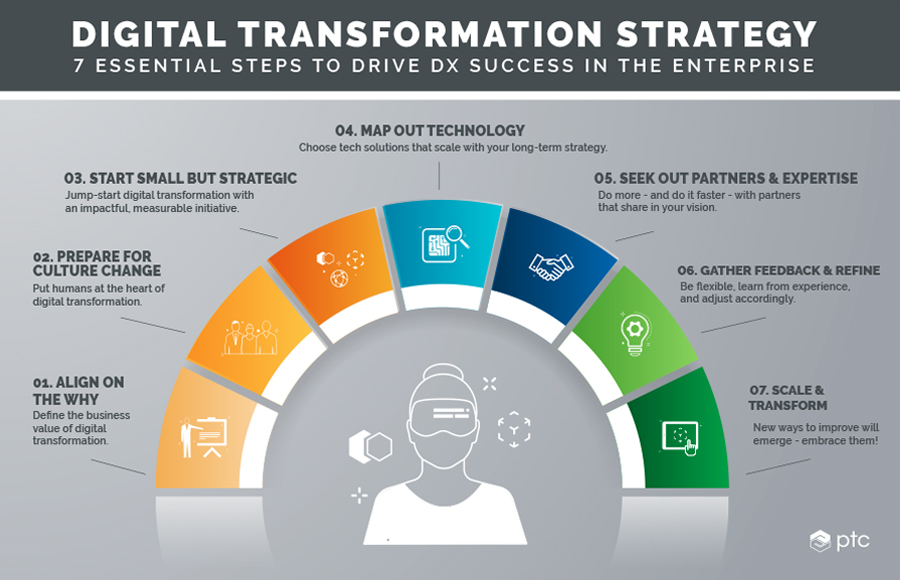
1. Align on the Why of Digital Transformation
2. Prepare for Culture Change
4. Map Out Technology Implementation
5. Seek Out Partners and Expertise
6. Gather Feedback and Refine as Needed
7. Scale and Transform
What Advantages Does Digital Transformation Offer Companies?
1. Improved Client Loyalty & Experience
Enabling consumers to communicate via their preferred devices—web, mobile, or chat—benefits businesses. Integrations that improve satisfaction and encourage repeat interaction include chatbots driven by artificial intelligence and the distribution of tailored content through several channels.
2. Increased Agility & Innovation
Businesses with a technology enterprise perspective use bespoke AI and hybrid cloud to create and launch products more quickly. Continuous delivery is supported by Agile and DevOps approaches, which transform innovation into a competitive advantage.
3. Automation for Operational Efficiency
Process digitalization and end-to-end automation optimize business operations, cutting down on manual labor and allowing teams to concentrate on important projects. This reduces operating expenses and boosts productivity.
4. Increased Employee Involvement
Businesses with highly engaged workers routinely beat their peers in terms of production, profitability, and absenteeism, according to Gallup.
5. Adaptability and Resilience
Businesses that are digitally resilient can quickly adjust to changing market conditions. Having an adaptive management roadmap guarantees quicker reactions to competitive challenges and changing consumer trends, whether it’s launching new services or modifying supply chains.
6. More robust cybersecurity
Legacy systems’ flaws are frequently revealed by emerging technologies. A careful consulting approach to security ensures data integrity throughout digital transitions, integrates enhanced protection, and proactively detects risks.
7. New Business Models & Revenue Streams
Digital platforms, such as mobile apps and e-commerce websites, provide avenues for expansion. Analytics driven by AI can find chances for upselling and cross-selling.
8. Making Decisions Based on Data
Real-time insights into consumer behavior, business operations, and market trends are provided by contemporary data architecture and analytics components.
Embracing the Future: Building Your Digital Transformation Strategy

Companies must integrate technology into their operations to continue to grow. But how do these companies stay on top of the latest innovations and weave them into their business model? They employ a powerful tool called a digital transformation strategy. We’ll look at four cutting-edge technologies that are changing the digital landscape and explain why you need a digital transformation strategy in this article.
Final thoughts
One of the myths around digital transformation is that it’s a destination As business and industry evolve, digital transformation—the blending of the digital and the physical—will remain an essential part of corporate strategy. competitive, differentiate products and services, and drive efficiency.