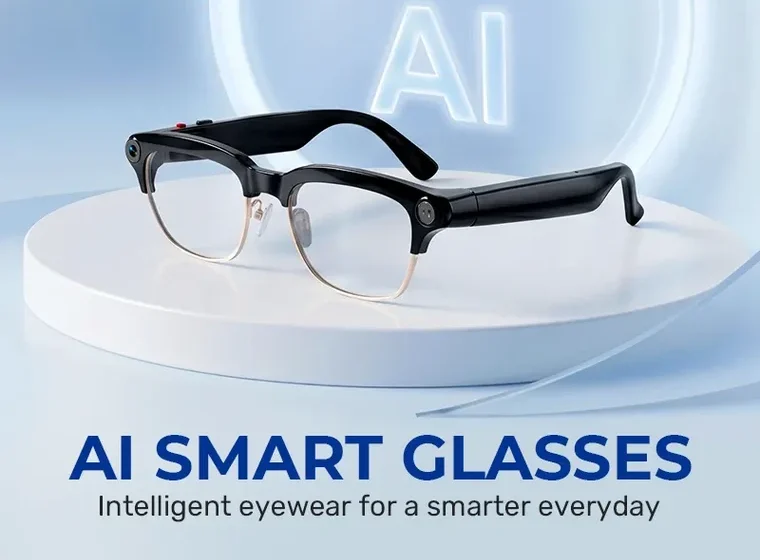

AI smart glasses, which combine the recognizable style of conventional eyeglasses with cameras, microphones, speakers, sensors, connection, and artificial intelligence, are emerging as a significant category of wearable technology. AI smart glasses, in contrast to traditional spectacles, are capable of responding to voice commands, answering inquiries, taking pictures and videos, translating across languages, helping with navigation, and more without having users to continuously reach for a smartphone.
What is AI Smart Glasses?
Depending on the model, they might have microphones for voice commands, open-ear speakers for calls and AI responses, a camera for photography and visual comprehension, and occasionally a display that puts information in the user’s field of vision.
Intelligence is the primary distinction between AI-powered glasses and standard smart glasses.
AI Smart Glasses: How Do They Operate?
AI smart glasses typically integrate a number of technologies:
- Camera: Takes pictures and videos, which could aid AI in comprehending things and its environment.
- Microphones: Record conversations and voice commands.
- Open-ear speakers let users hear their surroundings while delivering calls, music, navigation instructions, and AI responses.
- AI processor: Manages intelligent tasks such as picture comprehension and voice recognition.
- Connect the glasses to a smartphone or cloud-based services via Bluetooth and the internet.
- Users can manage settings, images, videos, and other features with the aid of a companion app.
Additionally, some more recent platforms are investigating on-device AI processing, which may lessen reliance on cloud services and enhance privacy and reaction times.
AI Smart Glasses’ Key Features
1. AI Speech Recognition
Natural voice commands can be used by users to communicate with an AI assistant. Without pulling out their phones, they may make calls, set reminders, manage media, ask questions, and request information.
2. Photography Without Using Your Hands
Users can take pictures and record first-person videos with their hands free thanks to built-in cameras. AI glasses available today can provide voice-activated capture and high-resolution cameras.
3. Translation in Real Time
AI glasses can help tourists by translating menus, signage, and conversations. Depending on the device, translations could be given by speakers in the glasses or shown graphically on a display.
4. Getting Around
Directions can be given by smart glasses using either visual or auditory signals, depending on whether they have a display. Walking, riding, and discovering new places may become more convenient as a result.
5. Identification of Scenes and Objects
AI is capable of analyzing what the camera sees and providing details about text, objects, locations, and surroundings. Applications for accessibility may also benefit from this capability.
6. Messages and Calls
For messaging and phone conversations, a lot of AI glasses may be connected to smartphones. Voice instructions allow users to converse while carrying their phones in their pockets.
7. Audio and Music
With open-ear speakers, users can stay aware of their surroundings while listening to music, podcasts, calls, and AI responses.
AI Smart Glasses’ Advantages
Hands-free engagement is the main benefit. Users can get information by voice or, on certain versions, a display instead of constantly checking a smartphone.
Additional advantages consist of:
- Increased productivity and convenience
- Creating content without using your hands
- Simpler navigation and travel
- Translation in real time
- Support for accessibility
- Easy access to AI support
- More organic engagement with digital data
AI glasses may potentially be helpful for those who are blind or visually impaired by using audio to communicate information and interpret their environment.
Security and Privacy Issues
Because cameras and microphones can function in public areas, one of the main issues with AI smart glasses is privacy.
As a result, manufacturers are incorporating extra safety measures and conspicuous recording signs.
Additionally, recent advancements demonstrate why privacy is still a crucial factor: In response to worries about people trying to record covertly, Meta has added further security.
When utilizing camera-equipped glasses, users should respect venue regulations, local laws, and other people’s privacy.
AI Smart Glasses’ Future
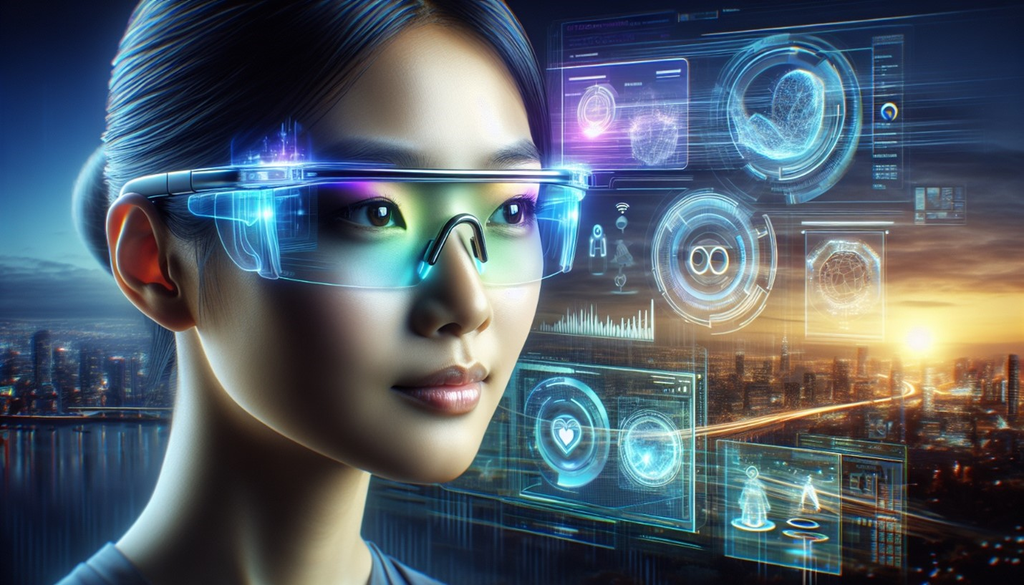
Smaller hardware, stronger AI models, longer battery life, better cameras, more powerful displays, and more on-device processing are all likely to be features of AI smart glasses in the future.
Smart glasses may develop from basic wearable items into personal computers that recognize the user’s environment and offer help when needed as AI becomes more sophisticated. Architectures that integrate real-time voice processing, AI agents, visual data, and task execution in smart glasses are already being investigated.
Conclusion
An important step toward hands-free computing is represented by AI smart glasses. In order to facilitate communication, navigation, content creation, language translation, and information access, they integrate conventional eyeglasses with AI assistants, cameras, audio, sensors, and connection.
Privacy, battery life, cost, accuracy, and social acceptability are still significant obstacles, though.