AI production planning is becoming an important part of modern manufacturing. By combining artificial intelligence, machine learning, predictive analytics, and automation, manufacturers can make better decisions about production schedules, inventory, resources, and customer demand. Instead of relying entirely on manual planning and historical assumptions, companies can use AI to analyze large amounts of data and identify more efficient ways to manage production.
What Is AI Production Planning?
AI production planning refers to the use of artificial intelligence to plan, schedule, and optimize manufacturing activities. An AI-powered production planning system can consider multiple factors at the same time, including raw-material availability, machine capacity, workforce requirements, production deadlines, inventory levels, and customer orders.
When conditions change, AI can help adjust the plan rather than requiring planners to rebuild the entire schedule manually.
How AI Works in Production Planning
AI production systems typically analyze data from ERP systems, inventory platforms, production equipment, sales records, and supply-chain operations. Machine-learning algorithms can identify patterns in this information and generate forecasts or recommendations.
For example, if customer demand is expected to increase, an AI system can evaluate available materials and manufacturing capacity and recommend how production should be adjusted. This can help businesses prepare for demand while avoiding unnecessary production.
AI for Demand Forecasting
Demand forecasting is one of the most valuable applications of AI in production planning. Traditional forecasting methods may depend heavily on historical sales data, while AI can analyze multiple variables and identify complex patterns.
AI can help predict seasonal demand, changing customer preferences, and potential increases or decreases in orders. More accurate forecasts allow manufacturers to plan production levels more effectively and reduce the risk of overproduction or shortages.
Inventory and Material Management
Production depends on having the right materials available at the right time. Too much inventory can increase storage costs, while insufficient materials can cause production delays.
AI can analyze inventory levels, supplier information, production schedules, and expected demand to support better material planning. It can also help identify potential shortages early, allowing businesses to take corrective action before production is affected.
Intelligent Production Scheduling
Creating an efficient production schedule can be complicated when manufacturers have multiple products, machines, employees, and deadlines.
AI can evaluate these constraints and recommend optimized schedules. If a machine breaks down, a supplier is delayed, or an urgent customer order arrives, an AI-powered system can help identify alternative scheduling options.
This flexibility can be especially valuable for manufacturers dealing with frequently changing production requirements.
Predictive Maintenance
AI production planning can also work together with predictive maintenance. Sensors connected to manufacturing equipment can collect information about machine performance.
AI can analyze this data to identify signs of potential equipment problems. Manufacturers can then schedule maintenance before a major failure occurs. This can reduce unexpected downtime and help production planners create more reliable schedules.
Benefits of AI Production Planning
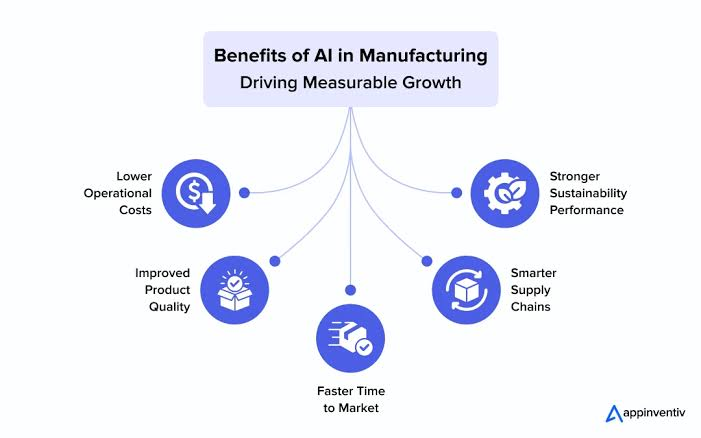
Businesses can gain several advantages from implementing AI in production planning:
- Improved production efficiency
- More accurate demand forecasting
- Better inventory control
- Reduced production delays
- Improved machine utilization
- More flexible scheduling
- Reduced operational waste
- Better resource allocation
- Faster data-driven decision-making
These benefits can help manufacturers improve productivity while responding more effectively to changing market conditions.
Challenges of AI Production Planning
Although AI offers significant opportunities, implementation can present challenges. AI systems require accurate and reliable data. Incomplete or inconsistent data can reduce the quality of forecasts and recommendations.
Businesses may also need to invest in software integration, employee training, data infrastructure, and cybersecurity. Connecting AI systems with existing ERP and manufacturing platforms can require careful planning.
Human expertise remains important as well. Production managers should be able to review AI recommendations and make decisions when unexpected circumstances or business priorities are not fully represented in the available data.
Future of AI Production Planning
The future of AI production is likely to involve increasingly connected and automated manufacturing environments. AI can work alongside IoT sensors, robotics, digital twins, predictive maintenance, and advanced analytics to create more responsive production systems.
As these technologies mature, manufacturers may be able to adjust production plans in near real time based on demand, machine performance, inventory, and supply-chain conditions.
Conclusion
AI production is transforming traditional manufacturing by making production schedules, inventory management, demand forecasting, and resource allocation more intelligent and adaptive. While businesses still need quality data, appropriate technology, and human oversight, AI can help manufacturers improve efficiency and respond faster to changing conditions. As smart manufacturing continues to grow, AI production is expected to become an increasingly important tool for modern businesses.