

As artificial intelligence transforms how consumers get information online, search engines are changing quickly. While AI-generated responses, conversational search, featured results, and other search experiences are becoming more and more important in modern search, traditional SEO mostly concentrates on rankings, keywords, backlinks, and website traffic. Businesses may better comprehend these shifts and develop an SEO strategy with the aid of an AI search monitoring software.
An AI Search Monitoring Platform:
An AI search monitoring tool keeps track of how a brand, website, or particular piece of information shows up in contemporary search settings. These platforms can examine visibility, mentions, competition, search intent, and AI-generated responses in addition to standard keyword rankings.
With this more comprehensive method, SEO teams can see more clearly how their material is found and shown in search results.
1. Track the visibility of AI
Tracking brand visibility in AI-powered search results is one of the main advantages of an AI search monitoring tool. Even while a website performs well for conventional keywords, it may not be very visible in AI-generated results.
Businesses may determine whether their brand, goods, services, and content are mentioned when people ask pertinent inquiries by keeping an eye on these results.
2. Find New Opportunities for Keywords
AI search monitoring can show what queries and subjects customers are looking up about a company. Marketers can find conversational queries, long-tail searches, and related topics instead of concentrating just on short keywords.
For instance, a business that focuses on “cloud migration consulting” would get relevant searches like:
- What is the cost of moving to the cloud?
- What are the advantages of moving to the cloud?
- What is the duration of a cloud migration?
- What are typical obstacles to cloud migration?
These observations can be used to create blog entries, manuals, FAQs, and content for service pages.
3. Recognize the purpose of the search
Content must match search intent for SEO to be successful. AI search tracking technologies can assist in determining whether users are searching for comparisons, products, services, information, or solutions.
Instead of just adding keywords to an article, marketers may produce content that precisely addresses consumer needs by understanding intent.
4. Monitor the Visibility of Competitors
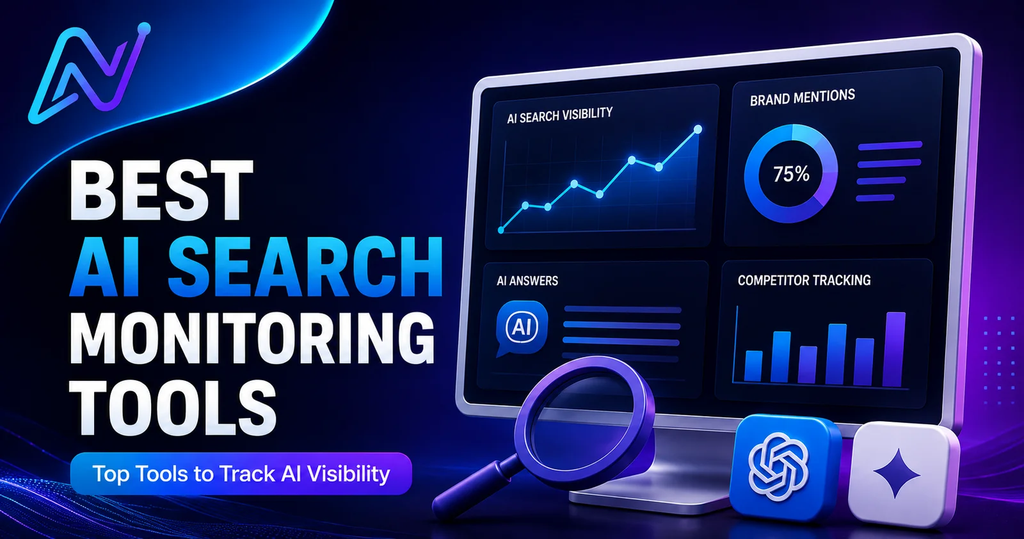
A further significant benefit is competitor analysis. Businesses can use an monitoring platform to discover which rivals regularly show up for key inquiries and what subjects they are related to.
SEO teams are able to examine content from competitors, spot holes, and create more robust resources that provide users more value.
5. Enhance Your Content Approach
Keeping an eye on AI search results might show which subjects are often mentioned and which queries are yet unanswered. Content planning can be guided by this information.
Companies can utilize this information to provide in-depth articles, case studies, FAQs, comparison pages, tutorials, and reliable resources. This can eventually strengthen the topical presence surrounding significant topics.
6. Track Brand Mentions
In addition to website rankings, SEO is increasingly linked to brand visibility. The frequency with which a brand appears in pertinent AI-generated responses and search experiences can be monitored by an AI search monitoring tool.
There may be a chance to improve content authority, competence, and relevance if rivals are frequently cited while your brand is not.
7. Find Content Gaps
When consumers have questions that the website’s current information does not sufficiently address, there are content gaps. By examining search queries and rival content, AI monitoring can draw attention to these overlooked subjects.
By filling in these gaps, a website can promote greater keyword coverage and topical authority while becoming a more valuable resource.
8. Use Data to Make SEO Decisions
Marketers can use monitoring data to make better SEO decisions rather than depending on conjecture. Performance data can reveal which pages want improvement, where competitors are gaining ground, and which themes attract visibility.
This helps teams prioritize their efforts and makes SEO more quantifiable.
AI Search Monitoring and SEO’s Future
SEO tactics will need to go beyond conventional rankings as search continues to shift toward AI-powered experiences. Companies will have a greater need to comprehend how various search contexts interpret, reference, and display their content.
An AI search monitoring software offers insightful information about these shifts. Businesses may create a more flexible SEO strategy by watching brand mentions, identifying content gaps, researching competitors, monitoring AI visibility, and finding keyword chances.
In the end, ranking for more keywords is not the only objective. Its goal is to produce credible, practical, and pertinent content that can be found and relied upon throughout the dynamic search ecosystem.