
AI chatbots for Businesses: What Are They?
Artificial intelligence (AI) chatbots for businesses are software programs that mimic human communication to perform activities like lead generation, customer care, and sales. Knowing common chat-bot price methods before committing to a platform might help you manage your budget.
Natural language processing (NLP) and machine learning (ML) are two technologies that AI chat-bots employ to comprehend user intent, deliver tailored responses, and learn from interactions over time. They also provide round-the-clock assistance and increase productivity by managing several questions at once.
AI chat-bots nowadays do more than just provide p rewritten answers. Using specialized AI lead generating chat-bot software helps automate capture and qualification for teams concentrating on sales pipeline expansion.
They can schedule meetings, update CRMs, evaluate papers, and initiate workflows throughout your tech stack. The most recent version can work with other AI agents to accomplish multi-step tasks without human assistance, manage voice conversations, and retrieve context from your knowledge base.
How These AI chatbots Were Tested
I used these tools in actual business situations. In order to determine whether platforms could truly manage the messiness of daily chores, I uploaded contracts, tested customer service flows, performed lead qualifying sequences, and created automated processes. The optimal conversational AI platform for your company’s workflow can be found by evaluating these features.
This is what I concentrated on:
- Accuracy: How well does it comprehend requests and offer pertinent answers?
- Agentic capabilities: Is it able to act or merely respond to inquiries?
- Business workflows: Does it work with your calendar, communication tools, and CRM?
- integration’s: What is the number of apps it connects to and how effective are they?
- Is it able to retrieve accurate information from your databases and documents?
- Team features: How simple is it to manage several agents, assign tasks, and collaborate?
10 best AI chat-bots for business
- Lindy: The greatest chat-bot or AI assistant for support and business tasks
- Chat GPT: Ideal for cross-team general-purpose work
- Claude: Excellent for document analysis and knowledge work
- Google Gemini: Ideal for groups utilizing Google Workspace
- Perplexity: Ideal for competitive intelligence and research
- Intercom: Ideal for customer service on websites
- idiot: The best for customer support in e-commerce
- many-chat: Ideal for messaging on social media
- zen-desk AI: The best for large-scale automation of customer service
- dial pad: The best phone and voice support
Best AI chatbots by Business Use Case
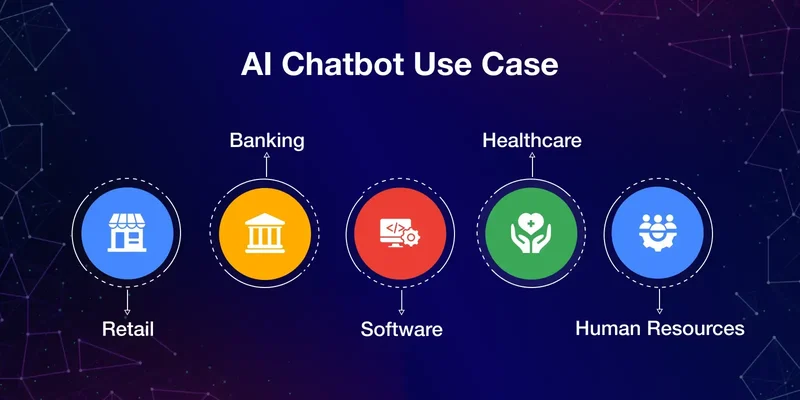
- Customer service: Intercom uses Fin AI Agent to manage high-volume support inquiries, retrieving responses from your Help Center and escalation to people only when necessary. Teams that require automation, live chat, and tickets on a single platform can benefit greatly from zen-desk AI. For eCommerce businesses looking for quick responses without investing in a larger support staff, idiot is ideal.
- Sales outreach: Lindy organizes calls, automates lead follow-ups, and updates your CRM without requiring human involvement. Before meetings, ChatGPT assists sales teams in creating customized emails and conducting prospect research. For representatives handling several engagements, dial pad Sell provides automated lead logging and in-call coaching.
- Marketing content: ChatGPT creates social media posts, blog entries, and campaigns in a variety of formats. Claude uses brand voice consistency and deliberate tone tweaks to refine messaging. Gemini pulls research straight from Google Workspace files to produce content.
- Internal knowledge management: ChatGPT retrieves replies from internal documents by connecting to Google Drive, SharePoint, and GitHub. Claude Projects functions as team memory, keeping uploaded files available throughout discussions. Gemini answers queries without requiring you to leave your desk by searching through Gmail, Drive, and Calendar.
- Research and analysis: In a matter of seconds, Perplexity provides referenced research from scholarly articles, corporate reports, and online conversations. Claude creates Python code, plots data trends, and examines CVS files to delve into intricate statistics. Deep Research from ChatGPT compiles information from numerous sources into organized reports.
- Project management: Lindy refreshes project boards, gives reminders when deadlines are approaching, and manages tasks across tools. ChatGPT uses meeting notes to manage action items and provide project briefs. Gemini pulls context from Drive and synchronizes tasks between Google Calendar and Keep.
- Automation + operations: Lindy manages several AI bots at once. A third person updates your CRM, another schedules meetings, and a fourth person triages support tickets. ChatGPT uses agent-based task delegation to automate workflows. The Comet browser from Perplexity manages online tasks including automating product publication and tracking stock availability.
How to Choose the Right AI chatbot for Your Business
To reduce your selections, concentrate on these six factors:
- Security is more important than functionality. Make sure your chat-bot complies with regulations like SOC 2, GDPR, or HIPAA if it handles consumer data, financial information, or medical records. Verify who may access data, where it is kept, and whether it is encrypted.
- Adoption is made or broken by integration’s: The chat-bot that integrates with your current tools is the best. Look for native connectivity to your calendar, service desk, email platform, and CRM. If you require custom workflows, API access is helpful, but built-in connectors save time.
- For regulated businesses, compliance is mandatory: HIPAA or industry-specific certifications are required for healthcare, financial, and legal teams. Check before committing because not all platforms offer them.
- Your demands are altered by team scale: One chat-bot may handle consumer inquiries for lone founders. Role-based permissions, shared knowledge bases, and communication tools are essential for teams of ten to fifty people. Businesses need audit logs, SO, and committed support.
- Long-term worth is determined by customization: Is it possible to train it on your brand voice? Can you create unique workflows using it? Is it possible to modify response logic in reaction to user behavior? It works better for your company if you have greater control.
- Expenses mount up more quickly than you may imagine: Free subscriptions are excellent for testing, but they typically limit access to AI models, integration’s, and messaging. Determine whether usage-based pricing makes sense or if a flat charge is more effective by calculating your monthly volume, support tickets, lead discussions, and internal queries.